
Starting in 2025, significant changes came to the HVAC industry. Under a federal rule from the U.S. Environmental Protection Agency, new home air conditioners and heat pumps must use lower-impact refrigerants, replacing the R-410A refrigerant that has been standard for nearly two decades. Here’s what homeowners need to know about this transition, including the benefits, costs, and what it means for those with older systems.
What the EPA Rule Actually Says
In 2020, Congress passed the American Innovation and Manufacturing (AIM) Act, which directs the EPA to phase down hydrofluorocarbons (HFCs), a family of refrigerants with a high global warming potential (GWP). Under the EPA’s Technology Transitions rule ↗, new residential and light commercial air conditioning and heat pump systems manufactured or imported from January 1, 2025 must use a refrigerant with a GWP below 700. Split systems built with components made before that date were given a limited window to be installed.
You can read the background on the phasedown directly from the EPA’s Reducing Hydrofluorocarbons (HFCs) program page ↗. The short version: the rule governs what new equipment is made with. It doesn’t require you to remove a system that’s already working in your home.
Why the Change?
The refrigerant transition is part of a broader effort to reduce greenhouse gas emissions. The older refrigerant R-22 was phased out because it damages the ozone layer; under the EPA’s phaseout of ozone-depleting substances ↗, production and import of new R-22 ended on January 1, 2020. R-410A, its replacement, doesn’t harm the ozone layer, but it has a high global warming potential. The newer refrigerants, such as R-454B and R-32, have a much lower GWP and are designed to meet modern environmental standards.
What Are the Benefits of the New Refrigerant?
- Improved Energy Efficiency: Systems using the new refrigerants are designed to operate efficiently, which can lower energy bills over time.
- Reduced Environmental Impact: The new refrigerants have a significantly lower global warming potential (GWP), making them better for the planet.
- Future-Proofing Your Home: A system built for the new refrigerant keeps you aligned with current regulations and avoids parts and refrigerant availability problems down the road.
Will This Increase Costs?
- Equipment Costs: New HVAC systems designed for the lower-GWP refrigerants were anticipated to cost roughly 10–20% more than earlier models.
- Maintenance Costs: As R-410A production is stepped down, it may become harder to source over time, which can raise the cost of repairs that require a refrigerant recharge on older systems.
- Installation Costs: Some of the new refrigerants are classified as mildly flammable (A2L), so installation follows updated safety codes, and a replacement may require changes to the existing line set, coil or electrical work.
Every home is different, which is why we provide free, written estimates for air conditioning replacement and heat pump replacement rather than one-size-fits-all pricing.
Do I Need a Whole New System If I Have the Old Refrigerant?
Not necessarily. If your current HVAC system is functioning well and uses R-410A, you don’t need to replace it. Existing systems can continue to be serviced and repaired. However, there are a few things to consider:
- Rising Costs for Repairs: As the supply of older refrigerants shrinks, recharging your system during a repair could become more expensive.
- Compatibility Issues: The new refrigerants can’t simply be added to an older system. When your current unit reaches the end of its lifespan, the outdoor unit and indoor coil will be replaced together as a matched system.
- Proactive Replacement: If your system is nearing the end of its expected lifespan (often 10–15 years) or needs a major repair, replacing it may make more sense than investing in older technology.
- R-22 Systems: If your system is old enough to use R-22, refrigerant for repairs is limited to recovered and reclaimed supplies. A leak on an R-22 system is usually a good time to talk about replacement.
How to Tell Which Refrigerant Your System Uses
Look for the data plate on your outdoor unit, usually on a side panel. It lists the model number, serial number and refrigerant type, such as R-22, R-410A, R-454B or R-32. If you can’t find it or aren’t sure what it means, snap a photo and our team can help you read it.
Repair or Replace? Questions to Ask
- How old is the system, and how many repairs has it needed in the last few years?
- Does the current repair involve a refrigerant leak or a major component such as the compressor?
- Is the system keeping your home comfortable, or are some rooms always too warm or humid?
- Are you planning to stay in the home long enough to benefit from a more efficient system?
If you’d like to talk through the numbers, our AC repair technicians will give you an honest diagnosis and tell you plainly when a repair makes sense. Financing is available for all credit types, including 0% APR for 72 months, with approved credit. See our financing options.
Affordable Air Heating and Cooling Is Here to Help
Navigating these changes can be overwhelming, but you don’t have to do it alone. Affordable Air Heating and Cooling is here to answer your questions and help you choose the best system for you and your family. Whether you need a repair, a replacement, or just expert advice, our team is ready to guide you through this transition. Contact us today to learn more and schedule your consultation!
SERVICE AREA
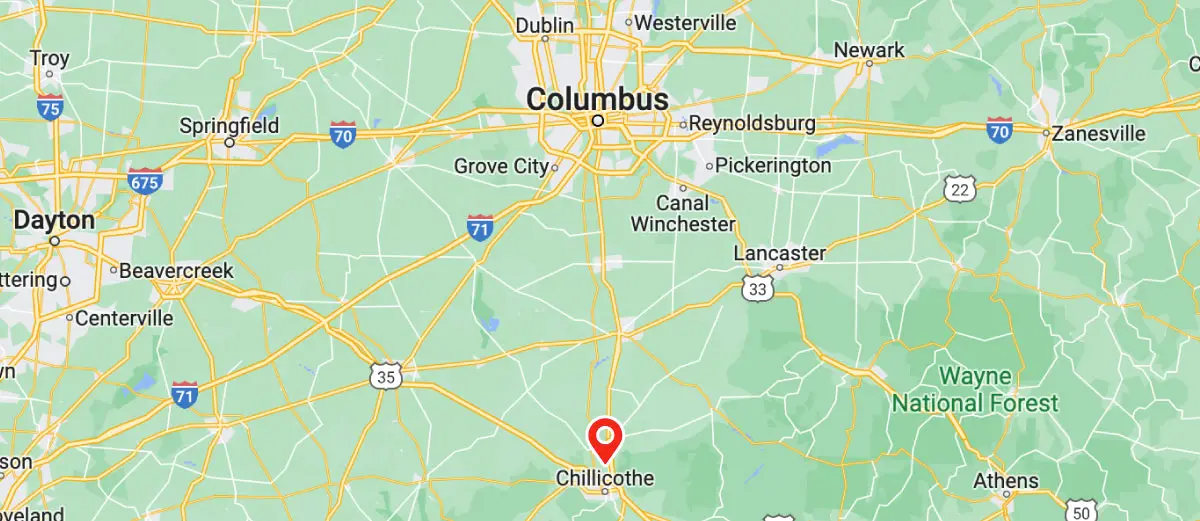
Proudly serving Ross County, Scioto County, Pickaway County, Jackson County and the surrounding areas
LET’S MAKE YOUR HOME COMFORTABLE AGAIN
Tell us what’s
going on.
Need a repair, a replacement estimate or routine maintenance? Start here.
(740) 779-0079Prefer to text? (740) 273-8551
For urgent service, please call.