
AFFORDABLE AIR HEATING & COOLING
AC Not Cooling? Common Causes & When to Call a Pro
It’s a muggy July afternoon in Chillicothe, the AC is running, and the house just keeps getting warmer. An air conditioner that runs but doesn’t cool is one of the most common calls we get every summer, and the cause ranges from a two-minute fix to a part that needs a licensed technician.
This guide walks through the most common reasons an AC stops cooling, what you can safely check yourself, and the signs that mean it’s time to call a pro.
First, a few quick checks you can do yourself
Before you call anyone, rule out the simple stuff. These checks are safe for any homeowner and solve a surprising number of “AC not cooling” problems.
Check the thermostat settings
Make sure the thermostat is set to Cool, not Heat or Fan, and that the temperature is set several degrees below the current room temperature. Check that the fan is set to Auto rather than On. With the fan on “On,” it keeps blowing between cooling cycles, which can feel like warm air coming from the vents.
If your thermostat runs on batteries and the screen is blank or dim, replace them. A thermostat with dying batteries can lose its connection to the system without warning.
Replace or check the air filter
A clogged filter is the number one cause of weak cooling we see. When the filter is packed with dust, pet hair and pollen, air can’t move across the indoor coil. Your home gets less cool air, the system works harder, and the coil can eventually freeze.
Pull the filter out and hold it up to a light. If you can’t see light through it, replace it. Most homes need a new filter every one to three months during cooling season, and more often with pets or ongoing construction nearby.
Check the breaker and the outdoor disconnect
Your AC has two main parts: the indoor unit (furnace or air handler) and the outdoor condenser. If the indoor fan is blowing but the outdoor unit is silent, the condenser may not be getting power.
Check your electrical panel for a tripped breaker labeled AC, condenser or HVAC. If it’s tripped, reset it once. If it trips again, stop and call a technician. A breaker that keeps tripping points to an electrical or compressor problem, and resetting it repeatedly can cause damage.
Look at the outdoor unit
Walk outside and look at the condenser. Grass clippings, cottonwood fluff, leaves and overgrown shrubs can choke off airflow through the coil. Keep at least two feet of clearance around the unit, and gently hose off light debris from the outside of the fins with the power off. Don’t use a pressure washer, which can bend the fins.
Common reasons an AC stops cooling
If the quick checks didn’t solve it, one of these is likely the cause. Most need a technician to diagnose and repair properly.
A frozen evaporator coil
If you see ice on the copper refrigerant lines near the indoor unit, or water pooling around the furnace, the evaporator coil has likely frozen. Ice blocks airflow, so the system runs but delivers little cooling.
Turn the system to Off and the fan to On to help it thaw, which can take several hours. Don’t chip at the ice. Once it thaws, replace the filter. If it freezes again, the cause is usually low refrigerant, a failing blower motor or a deeper airflow problem, and it needs a technician.
Low refrigerant from a leak
Refrigerant isn’t used up like fuel. If your system is low, it has a leak. Signs include warm air from the vents, a hissing or bubbling sound, ice on the lines and higher electric bills.
Only an EPA-certified technician can legally handle refrigerant. A good tech will find and repair the leak, not just top off the system, since adding refrigerant without fixing the leak only buys a few weeks.
A failing capacitor
The capacitor gives the compressor and outdoor fan motor the jolt they need to start. When it weakens, often after a hot stretch or a power surge, you might hear a humming outdoor unit that won’t start, or a fan that isn’t spinning.
Capacitors are one of the most common AC repairs we make, and usually one of the more affordable ones. They store a dangerous electrical charge even with the power off, so this is not a DIY repair.
Dirty condenser coils
Your outdoor unit releases the heat pulled from your home. When its coil is coated with dirt and debris, it can’t shed heat efficiently. On the hottest days, a dirty coil can push the system past its limits, and it may struggle to keep up or shut off on high pressure.
A professional coil cleaning during an AC tune-up is the best prevention.
A compressor problem
The compressor is the heart of the system. A failing compressor may hum, click, run hot, trip the breaker or refuse to start. Compressor repairs are among the most expensive AC repairs, so on an older system, this is often the point where replacement makes more sense. Our guide on whether to repair or replace walks through that decision.
Leaky or undersized ductwork
If some rooms cool fine and others never do, the problem may be your ducts rather than the AC itself. Leaky ducts in an attic or crawl space can lose a large share of your cooled air before it reaches the rooms that need it. Undersized ducts or closed vents can starve rooms of airflow, too.
The system is undersized or worn out
On the hottest, most humid days, even a healthy system runs nearly nonstop. That’s normal. But if your AC can never get your home within a few degrees of the setting, it may be too small for your home, or simply worn out. Most central air systems last about 12 to 15 years, depending on maintenance and use.
When to call a professional
Call an HVAC technician if you notice any of these:
- The breaker trips again after you reset it
- Ice on the refrigerant lines or indoor coil that comes back after thawing
- Hissing, buzzing, grinding or loud clanking noises
- A burning smell from the vents or the outdoor unit
- The outdoor unit hums but the fan won’t spin
- The system runs constantly but the house never cools down
- Water leaking around the indoor unit
When something sounds or smells wrong, shut the system off and call. Running a damaged system can turn a small repair into a big one.
How to keep it from happening again
Most cooling breakdowns we see in Ross County and the surrounding area trace back to skipped maintenance. A yearly tune-up catches weak capacitors, low refrigerant, dirty coils and failing parts before they leave you without cooling on the hottest day of the year.
Our Comfort Club includes an annual A/C tune-up and furnace tune-up, priority service and 10% off repairs, so the small stuff gets caught early.
Frequently asked questions
Why is my AC running but not cooling?
The most common causes are a dirty air filter, incorrect thermostat settings, a frozen evaporator coil, low refrigerant from a leak, a failing capacitor or a dirty outdoor coil. Start with the thermostat and filter. If those aren’t the problem, call a technician.
Is it safe to keep running my AC if it isn’t cooling?
Not usually. If the coil is frozen or the system is low on refrigerant, running it can damage the compressor, which is the most expensive part to replace. Turn it off and call for service.
How long should it take my AC to cool my house?
A healthy system should lower the temperature about one degree every 15 to 20 minutes under normal conditions. On very hot, humid days it will be slower. If the temperature isn’t dropping at all, something is wrong.
Can I add refrigerant myself?
No. Handling refrigerant requires EPA certification, and topping off a leaking system doesn’t fix the underlying problem.
AC not cooling in Chillicothe? We can help
If you’ve checked the basics and your AC still isn’t cooling, Affordable Air can diagnose the problem and explain your options clearly before any work starts. We’ve served Chillicothe and Southern Ohio since 2006.
Call (740) 779-0079 or request service online. Already have a quote from another company? Ask about our free second opinion.
SERVICE AREA
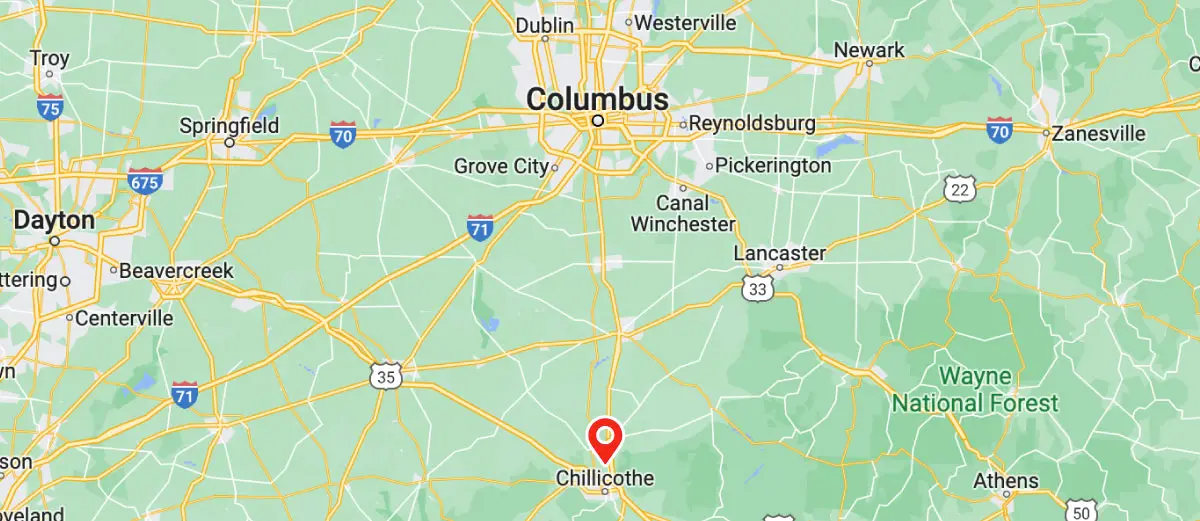
Proudly serving Ross County, Scioto County, Pickaway County, Jackson County and the surrounding areas
LET’S MAKE YOUR HOME COMFORTABLE AGAIN
Tell us what’s
going on.
Need a repair, a replacement estimate or routine maintenance? Start here.
(740) 779-0079Prefer to text? (740) 273-8551
For urgent service, please call.